সিঙ্গেল-বিম বনাম মাল্টি-বিম ইকো সাউন্ডার: কোনটি ব্যবহার করবেন
সিঙ্গেল-বিম এবং মাল্টি-বিম ইকো সাউন্ডারের মধ্যে নির্বাচন করা একটি প্রশ্নের ওপর নির্ভর করে: আপনার প্রকল্পের কি একটি প্রোফাইল লাইন প্রয়োজন, নাকি একটি সম্পূর্ণ পৃষ্ঠ? এই দুটি প্রযুক্তি মৌলিকভাবে ভিন্ন ম্যাপিং সমস্যার সমাধান করে।
একটি সিঙ্গেল-বিম সাউন্ডার নৌকার ঠিক নিচে একবারে একটি বিন্দুতে গভীরতা পরিমাপ করে। যেখানে একটি মাল্টি-বিম সাউন্ডার একটি পাসেই সমুদ্রের তলদেশ বা নদীর তলদেশের একটি বিস্তৃত অংশ কভার করে একসাথে ডজন ডজন বা শত শত বিম নির্গত করে।
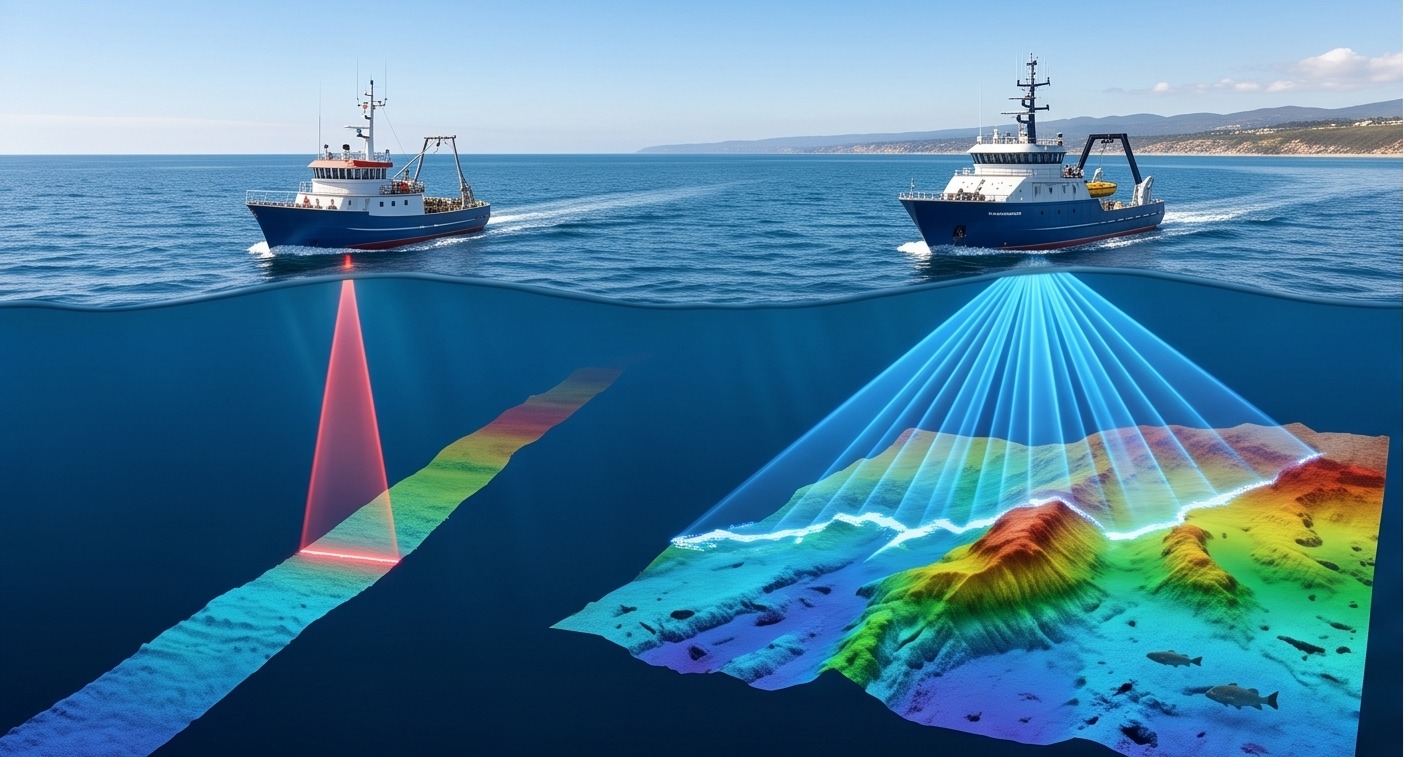
পাশাপাশি কভারেজ তুলনা করুন
লাইভ কভারেজ তুলনা
সাউন্ডারের ধরনের মধ্যে সুইচ করুন
ইন্টারেক্টিভ কভারেজ এক্সপ্লোরার
সময় এবং শ্রমের পার্থক্য দেখুন
জরিপ লাইন যোগ করতে ক্লিক করুন
সঠিক সাউন্ডার নির্বাচন করা
প্রকল্পের সুযোগ
সম্পূর্ণ তলদেশ ম্যাপিং প্রকল্পগুলি মাল্টি-বিম থেকে উপকৃত হয়, আর সাধারণ গভীরতা প্রোফাইলিংয়ের জন্য সিঙ্গেল-বিম কার্যকর।
বাজেট বিবেচনা
সিঙ্গেল-বিম সরঞ্জাম এবং ডেটা প্রসেসিং সাধারণত মাল্টি-বিম সিস্টেমের চেয়ে কম ব্যয়বহুল।
বৈশিষ্ট্য সনাক্তকরণ প্রয়োজন
মাল্টি-বিম সম্পূর্ণ এলাকা জুড়ে ছোট জলের নিচের বাধা, ধ্বংসাবশেষ বা সূক্ষ্ম ভূখণ্ডের পরিবর্তন সনাক্ত করতে পারদর্শী।
সময় সীমাবদ্ধতা
মাল্টি-বিম প্রতি পাসে দ্রুত এলাকা কভার করে, যা বড় বা সময়-সংবেদনশীল জরিপ প্রকল্পের জন্য গুরুত্বপূর্ণ।
ডেটা ভলিউম ব্যবস্থাপনা
মাল্টি-বিম প্রচুর পরিমাণে ডেটা তৈরি করে, যার জন্য অতিরিক্ত প্রসেসিং সময় এবং স্টোরেজ প্রয়োজন।
| ফ্যাক্টর | সিঙ্গেল-বিম | মাল্টি-বিম |
|---|---|---|
| প্রতি পাসে কভারেজ | একক লাইন | প্রশস্ত সোয়াথ (Swath) |
| সরঞ্জামের খরচ | কম | বেশি |
| যার জন্য সেরা | প্রোফাইল লাইন, সাধারণ গভীরতা পরীক্ষা | সম্পূর্ণ-এলাকা ম্যাপিং, বাধা সনাক্তকরণ |
ড্রেজিং ভলিউম যাচাইকরণ বা বিপদ সনাক্তকরণের মতো সম্পূর্ণ তলদেশ কভারেজের প্রয়োজন এমন প্রকল্পের জন্য মাল্টি-বিম অপরিহার্য। সিঙ্গেল-বিমের লাইনের মাঝের ফাঁক গুরুত্বপূর্ণ বৈশিষ্ট্যগুলিকে লুকিয়ে রাখতে পারে।
সিঙ্গেল-বিম আপনাকে একটি লাইনে গভীরতা বলে। মাল্টি-বিম আপনাকে পুরো তলদেশের আকৃতি বলে।
আপনার প্রকল্পের জন্য উপযুক্ত সরঞ্জাম
The right choice depends entirely on what your deliverable needs to show, not simply which technology sounds more advanced. Our drone survey team evaluates project requirements before recommending single-beam or multi-beam bathymetric equipment for your site.
কোন সাউন্ডারটি আপনার প্রকল্পের জন্য উপযুক্ত তা নিশ্চিত নন?
আমাদের আপনার জলাশয়ের ধরন এবং প্রয়োজনীয়তা জানান, আমরা সঠিক পদ্ধতির সুপারিশ করব।
ঘন ঘন জিজ্ঞাসিত প্রশ্নাবলী
সিঙ্গেল-বিম একবারে একটি বিন্দুতে গভীরতা পরিমাপ করে, আর মাল্টি-বিম একসাথে বিস্তৃত অংশের ডেটা ক্যাপচার করে।
সবসময় নয়, মাল্টি-বিম পুরো এলাকার জন্য ভালো হলেও এতে খরচ ও ডেটা বেশি হয়।
মাল্টি-বিম সাধারণত বড় এলাকার জন্য দ্রুত কারণ প্রতিটি পাস একটি বিস্তৃত সোয়াথ ক্যাপচার করে।
সিঙ্গেল-বিম লাইনের মাঝের ছোট বাধা মিস করতে পারে, তাই বিপদের সতর্কতার জন্য মাল্টি-বিম ভালো।
হ্যাঁ, সিঙ্গেল-বিম সরঞ্জাম এবং ডেটা প্রসেসিং সাধারণত কম ব্যয়বহুল।
ড্রেজিং ভলিউম যাচাই, বন্দর জরিপ এবং বাধা সনাক্তকরণ প্রকল্পে মাল্টি-বিম প্রয়োজন।
হ্যাঁ, মাল্টি-বিম জরিপের বিশাল ডেটা ভলিউমের জন্য বেশি প্রসেসিং সময় এবং স্টোরেজ প্রয়োজন।
নদীর ক্রস-সেকশন বরাবর সাধারণ গভীরতা প্রোফাইলিংয়ের জন্য সিঙ্গেল-বিম যথেষ্ট হতে পারে।
আধুনিক মাল্টি-বিম সিস্টেমগুলি সেন্টিমিটার-স্তরের গভীরতা নির্ভুলতা অর্জন করে।
বেশিরভাগ আধুনিক সফটওয়্যার উভয় ডেটা টাইপ সমর্থন করে।
এই লাইনটি প্রজেক্ট লিডদের জন্য সংরক্ষিত। অনুগ্রহ করে শেখা বা চাকরির জন্য যোগাযোগ করবেন না।